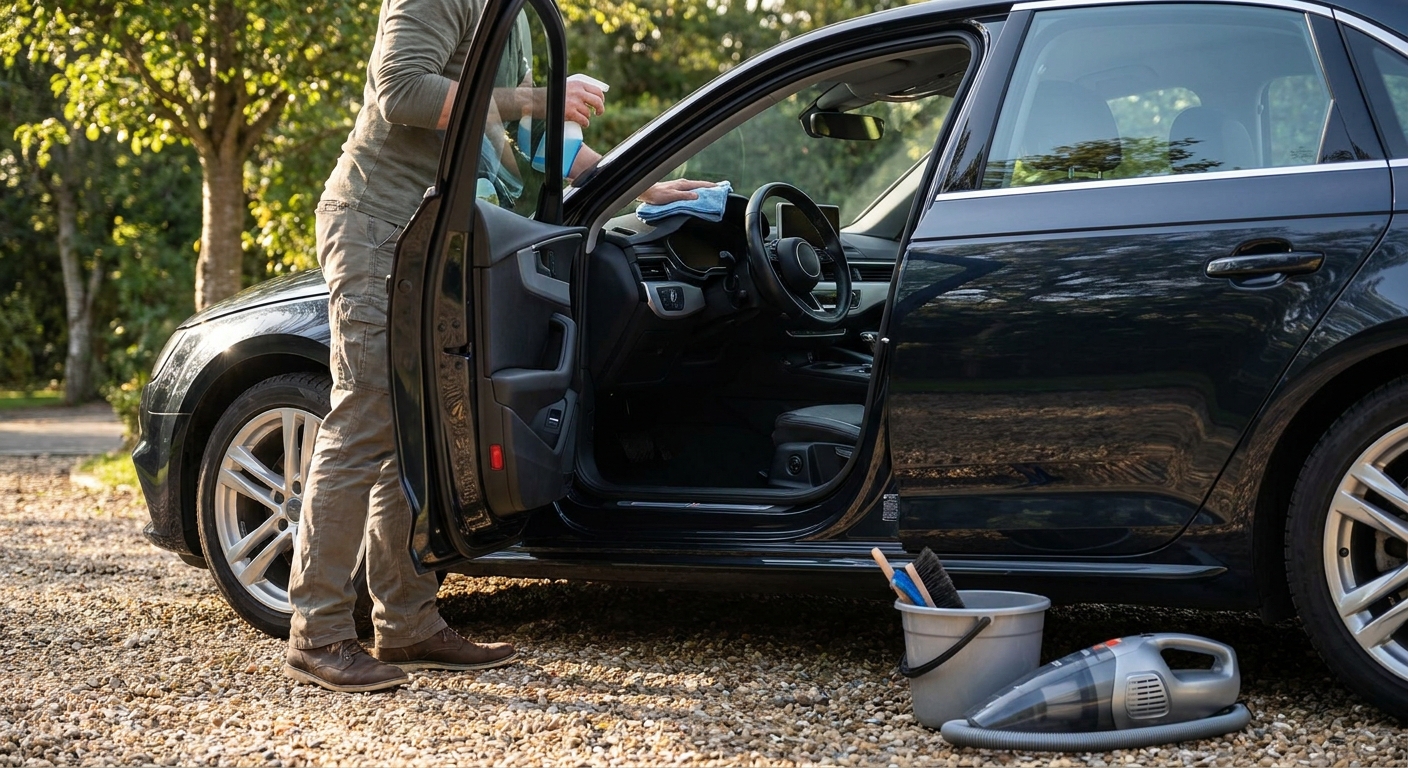
Between professional details, a car collects coffee rings, dog hair, and road grime fast enough to undo weeks of work in a single commute. This guide breaks down the daily and weekly habits that keep a car looking freshly detailed, plus the mistakes that quietly wreck a finish before the next appointment.
- Wiping high-touch surfaces daily and vacuuming weekly is how to keep your car clean between details without extra cost.
- A pH-neutral spray detailer maintains paint gloss between washes — skip dish soap, it strips wax in one use.
- Rinsing off road salt or bird droppings within 24 hours prevents etching that a full detail can't reverse.
- AutoMojo customers who book monthly maintenance washes report less buildup than those who wait for full details.
Why this matters
A full detail resets the car. What happens in the following 30 to 60 days determines how long that reset lasts. UV exposure fades interior plastics, road salt etches clear coat, and everyday dust turns into a sanding compound the moment someone drags a dry cloth across the hood.
Skipping upkeep doesn't just make the car look worse — it shortens the life of the work already paid for. Interior stains that sit for more than a week become permanent in cloth seats, and swirl marks from improper wiping build up until the next detail has to correct damage instead of just refreshing shine. In 2026, most detailing packages assume some owner maintenance in between visits; skipping it means paying for correction work, not just upkeep.
What you'll need
- Microfiber towels (at least 4 — one for glass, one for paint, one for interior, one for wheels)
- A pH-neutral quick detailer spray
- A handheld or car vacuum with a crevice attachment
- An interior brush or detailing paddle for vents and seams
- A UV protectant for dash and vinyl (silicone-free)
- A trash bag or small bin that fits the center console
- 10-15 minutes, 2-3 times a week
The steps
1. Wipe high-touch surfaces every day
Steering wheel, gear shifter, door handles, and touchscreen collect oil and grime faster than any other surface. A 60-second wipe with a slightly damp microfiber towel each evening stops buildup from setting into texture and vents.
Common mistake: using disinfectant wipes with alcohol on leather or vinyl — the alcohol dries out the material and causes cracking within months.
2. Vacuum weekly, not monthly
Dirt trapped in carpet fibers acts like sandpaper every time someone steps in or out. A weekly five-minute vacuum session, focused on floor mats and the driver's footwell, prevents the grit from grinding into the fabric.
Run the crevice tool along the seat tracks and center console seams — that's where crumbs and small debris hide and eventually jam mechanisms.
Common mistake: vacuuming only the visible carpet and skipping under the seats, where most food debris and dust actually collect.
3. Use a spray detailer between washes
A quick detailer spray with a clean microfiber towel removes dust and light fingerprints from paint without water or soap. It takes under 10 minutes for a full exterior pass and maintains the gloss a detail left behind.
Spray a small section at a time and wipe in straight lines, not circles — circular motions are what cause the fine swirl marks visible under direct sun.
Common mistake: using a bath towel or paper towel instead of microfiber. Both have enough texture to scratch clear coat on contact.
4. Rinse off contaminants within 24 hours
Bird droppings, tree sap, and road salt are acidic or abrasive enough to etch clear coat if left for more than a day. A quick rinse with a hose, focused just on the affected panel, prevents permanent marking.
This matters most in winter months when road salt is constant — even a 90-second rinse of the lower doors and wheel wells cuts corrosion risk significantly.
Common mistake: waiting until the next scheduled wash to deal with contamination, by which point etching has already started.
5. Clean floor mats separately
Pull the mats out and shake or hose them off weekly rather than vacuuming them in place. Mud and salt residue trapped under the mat edges causes more carpet damage than anything tracked in on shoes.
Let them fully dry before reinstalling — trapped moisture under a mat is a fast path to mildew smell.
Common mistake: spraying interior cleaner directly onto mats without letting them dry, which just re-deposits the dirt when the mat goes back down.
6. Manage clutter and trash daily
A small trash bag clipped to the console and a five-second sweep at the end of each drive stops receipts, wrappers, and cups from becoming a permanent fixture. Clutter also traps moisture and odor that a detail can't fully remove if it's baked in for weeks.
7. Apply UV protectant monthly
Dashboards, door panels, and vinyl trim fade and crack under direct sun exposure. A silicone-free UV protectant applied once a month keeps these surfaces flexible and matte instead of glossy and sticky.
Common mistake: using a silicone-based protectant, which leaves a shiny finish that attracts more dust and can make the dashboard reflect glare onto the windshield.
Book your next professional detail
Schedule an on-demand detail or wash with AutoMojo, delivered to your driveway.
8. Schedule a maintenance wash between full details
A full interior and exterior detail every 60-90 days paired with a maintenance wash every 2-3 weeks keeps buildup from ever reaching correction-level. AutoMojo books both on-demand, which removes the excuse of "no time" that usually kills upkeep routines.
Troubleshooting
- Streaks after wiping down the dash: the towel is too dry or already loaded with dust. Switch to a fresh microfiber towel and lightly dampen it before wiping.
- New swirl marks on the hood: circular wiping motion or a dirty towel dragging grit across the paint. Switch to straight-line wipes and rotate to a clean towel section every panel.
- Persistent odor despite vacuuming: the source is usually trapped moisture in mats or a spill under the seat, not surface dirt. Pull the mats fully and check under the seat tracks.
- Water spots after rinsing: hard water minerals drying on the panel before it air-dries. Towel-dry the panel immediately after rinsing instead of letting it drip dry.
- Interior plastic looks hazy after protectant: too much product applied, or a silicone-based formula used in direct sun. Apply a thin coat and buff off excess within a few minutes.
- Wheels still look dull after a wash: brake dust needs a dedicated wheel cleaner, not the same soap used on paint. A separate wheel brush and cleaner prevents cross-contaminating the wash mitt.
Tools and resources
- Microfiber towels rated for automotive use, not household cleaning cloths
- A pH-neutral quick detailer, not an all-purpose glass or kitchen cleaner
- A vacuum with a narrow crevice attachment for seat tracks and vents
- A silicone-free UV protectant for dash and door panels
- AutoMojo for scheduled maintenance washes and full details on-demand
“A car that gets a 10-minute wipe-down three times a week needs less correction work at every detail than one that only gets touched once a month.”
What to do next
Set a recurring reminder for the weekly vacuum and rinse, since the routines that fail are the ones left to memory. Pair that with a maintenance wash on a fixed schedule rather than an as-needed basis — cars on a fixed 2-3 week wash cycle in 2026 show noticeably less paint correction work needed at the next full detail compared to cars washed only when visibly dirty.
FAQ
How often should you clean your car between professional details?
Wipe high-touch surfaces daily, vacuum weekly, and schedule a maintenance wash every 2-3 weeks between full details. This keeps dirt from compounding into stains or swirl marks that require correction work at the next appointment.
What's the best way to keep car interior clean between details?
Vacuum weekly, wipe surfaces daily with a damp microfiber towel, and remove trash immediately after each drive. Spills and crumbs left for more than a week are far harder to remove and often stain permanently.
Is a quick detailer spray better than a full wash for maintenance?
A quick detailer spray is faster and works well between full washes for removing dust and fingerprints, but it doesn't replace a proper wash for road grime or salt buildup. Use spray detailing weekly and a full wash every 2-3 weeks.
How do you protect car paint between details in winter?
Rinse off road salt within 24 hours, since it's acidic enough to etch clear coat if left sitting. A quick rinse of the lower doors and wheel wells during salt season prevents most corrosion damage.
Can you use household cleaners on car interiors?
No — household glass and multi-surface cleaners often contain ammonia or alcohol that dry out leather, vinyl, and tinted windows. Use automotive-specific interior cleaners and a silicone-free UV protectant instead.
How much does it cost to maintain a car between full details?
Maintenance supplies like microfiber towels, quick detailer spray, and UV protectant typically run under $50 total and last several months. Scheduled maintenance washes cost less per visit than the correction work needed when upkeep is skipped entirely.
Does vacuuming weekly really make a difference?
Yes — dirt trapped in carpet fibers acts like sandpaper with every step, wearing down the fabric faster than a delayed monthly vacuum session would. Weekly vacuuming, especially in the footwells, extends the life of factory or aftermarket carpet noticeably.
What's the biggest mistake people make trying to keep their car clean?
Wiping paint with the wrong towel or a circular motion, which causes fine swirl marks that build up over months. Straight-line wipes with a clean microfiber towel and a proper quick detailer avoid this entirely.
One last thing
The difference between a car that still looks detailed after 60 days and one that needs full correction work usually isn't the products — it's the towel. A dry, dust-loaded microfiber towel dragged across paint causes more fine scratching than most owners realize, and it's the single most common reason a car looks duller a month after a professional detail than it should. Rotate towels often, keep one dedicated to paint only, and the gloss from the last AutoMojo appointment lasts noticeably longer into 2026.